
How Does an Air Classifier Mill Work?
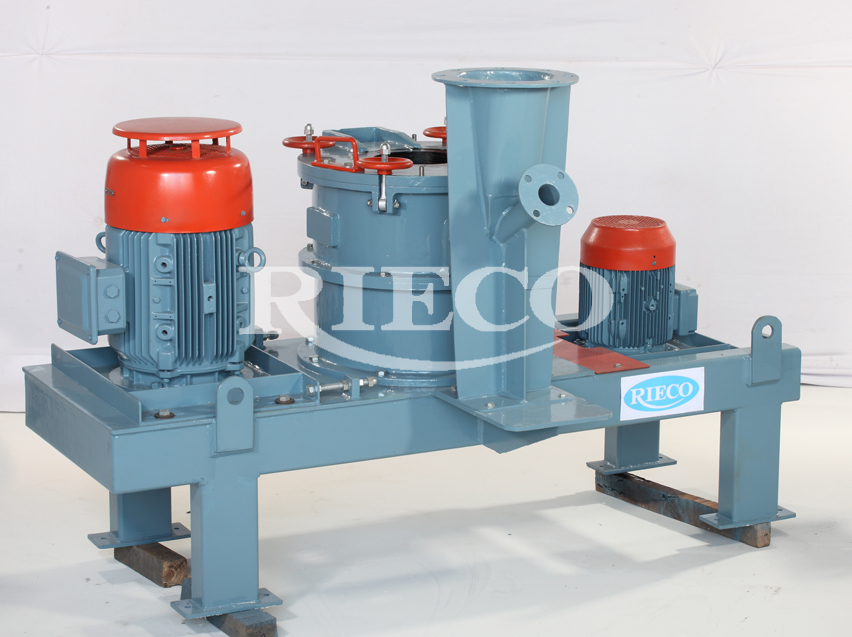
Air Classifying Mill
Here’s your cleaned, corrected HTML (no CSS). I fixed grammar and wording, standardized terms, merged fragmented ordered lists, removed inline styles, and changed staging links to production.
Introduction
Among the innovative machinery essential for efficient and precise material processing, the air classifying mill stands out. Extensively used in the food, pharmaceutical, and chemical industries, it offers a unique solution for simultaneous particle-size reduction and separation. This article explains what air classifying mills are, how they operate, their key benefits, and why they fit certain applications so well.
What is an Air Classifying Mill?
ACMs—air classifying mills—are versatile machines designed to grind materials to very fine powders while classifying particles by size. In other words, they blend impact milling with air classification to produce uniformly sized particles efficiently. A key advantage is that both mechanical and aerodynamic forces act together to precisely shape the resulting particle-size distribution.
Typical components include a grinding chamber, classifier wheel, feed inlet, and exhaust/collection outlets. Material is fed into the grinding chamber, reduced in size, and carried to the classifier where fine particles are separated and collected while coarse particles are returned for further grinding.
How Does an Air Classifying Mill Work?
- Material feeding: Material is fed into the mill’s grinding chamber via a hopper. Gravity or mechanical feeders ensure a consistent flow.
- Preliminary milling: Rotating hammers or pins/blades grind the material. Rotor speed and element configuration influence the initial particle size.
- Airflow & transport: Process air enters through the mill base and carries ground particles upward toward the classifier section.
- Classification: A rotating classifier wheel imparts centrifugal force, separating particles by size. Fines pass to the product outlet; coarse particles return to the grinding zone.
- Collection: Fine product is discharged for packaging or further processing. Coarse material is continuously recycled, improving efficiency.
- Air filtration & exhaust: The conveying air—containing residual dust—is filtered (e.g., cyclone and bag filter) before being vented, meeting regulatory and environmental requirements.
Air Classifying Mill — Main Advantages
- Accurate particle-size control: Integrated classification delivers products matched to specific application requirements.
- Productivity: Combining grinding and classification in one system reduces energy use and process time.
- Versatility: Capable of processing a wide range of materials—soft, hard, or brittle.
- Hygiene: Air conveying reduces cross-contamination risks typical of purely mechanical handling.
- Scalability: Configurations range from lab/pilot to full-scale industrial systems.
Conclusion
Air classifying mills represent a significant advance in particle-size reduction and classification. Their integrated design enables efficient grinding with tight, uniform size control to meet industry needs. Whether your application is in food, pharmaceuticals, or chemicals, understanding how air classifying mills work—and where they excel—can guide better investment decisions. Adopting this technology can yield higher productivity, consistent quality, and improved process efficiency.


